Posted on 1
st December 2020 at 02:25 PM |
With the new 2020 "20" registration number plate coming out, we thought it might be a good idea to clear up any confusion about how number plates work in the UK.
In this Car Registration Plate Guide, we look at the updates to the modern system. With this you can work out the age of any new vehicle!
The Modern Registration Plate System
Twice a year since 2001, number plates are updated with a new code to signify the year and the month of registration, either March or September.
Using this system, you can identify the time of registration, and generally the age, of most vehicles.
To match this timeline, car manufactures often release new updates to their lease cars around this time.
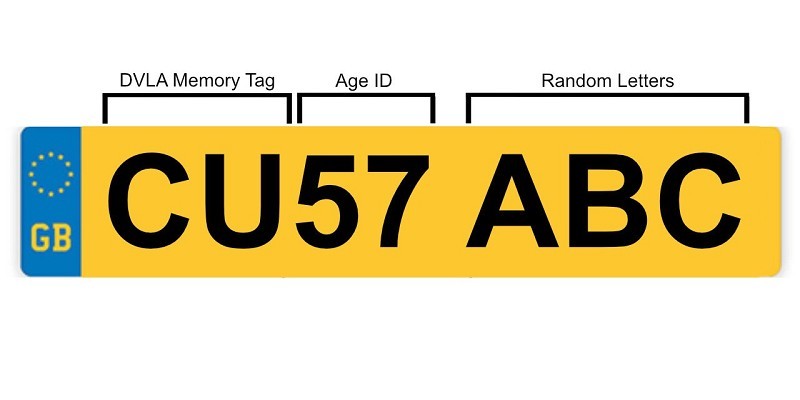
In the above example you can see three sections to a UK Number plate. These are the DVLA memory tag, age identifier and random spacer letters.
The most important of these is the Age ID
The two numbers in a registration plate correspond to the age of the vehicle, where the first number indicates the month of registration and the second indicates the year.
Below is a handy list of the years.
2001
March = ×/Y
September = 51
2002
March = 02
September = 52
2003
March = 03
September = 53
2004
March = 04
September = 54
2005
March = 05
September = 55
2006
March = 06
September = 56
2007
March = 07
September = 57
2008
March = 08
September = 58
2009
March = 09
September = 59
2010
March = 10
September = 60
2011
March = 11
September = 61
2012
March = 12
September = 62
2013
March = 13
September = 63
2014
March = 14
September = 64
2015
March = 15
September = 65
2016
March = 16
September = 66
2017
March = 17
September = 67
2018
March = 18
September = 68
2019
March = 19
September = 69
2020
March = 20
September = 70
2021
March = 21
September = 71

 Abarth
 Alfa Romeo
 Aston Martin
 Audi
Audi Bentley
 BMW
BMW Citroen
 Cupra
Cupra Dacia
Dacia DS
DS Fiat
Fiat Ford
Ford Genesis
 Honda
Honda Hyundai
 Infiniti
 Jaguar
 Jeep
Jeep KIA
KIA Lamborghini
 Land Rover
 Lexus
Lexus Lotus
Lotus Maserati
 Mazda
Mazda Mclaren
 Mercedes-Benz
 MG
MG Mini
Mini Mitsubishi
 Nissan
 Peugeot
 Polestar
 Porsche
 Renault
 Rolls-Royce
 Seat
Seat Skoda
Skoda Smart
Smart Ssangyong
 Subaru
 Suzuki
 Tesla
Tesla Toyota
 Vauxhall
 Volkswagen
 Volvo
Volvo SUVs & 4X4s
 City-Cars
 Coupe
Coupe Convertible
 Estate
 Hatchback
 Saloon
 MPVs, People Carriers & 7-Seaters
 Minibuses
 Prestige
 Performance
 Electric